
DIY coffee roasting — do not try this at home... or should you?
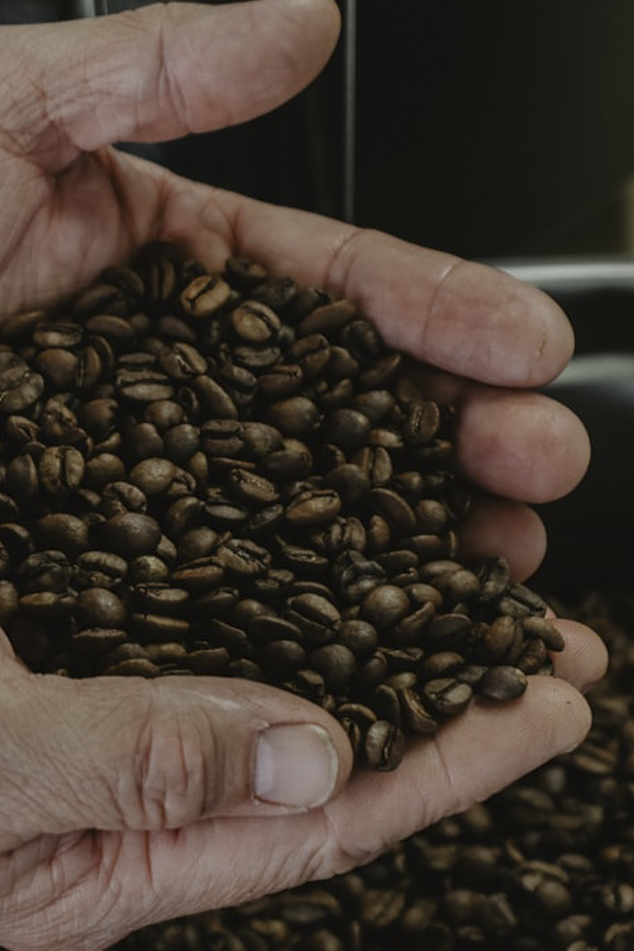
Can you roast coffee at home?
We may be shooting ourselves in the foot by admitting it, but roasting coffee at home IS possible. After all, people in Jordan and Saudi Arabia still prepare their little black coffees this way. It does, however, take plenty of patience. Without the right skills and experience in roasting techniques, you are unlikely to produce a coffee you will enjoy drinking. In other words, you can play coffee MacGyver, but we cannot take responsibility for the results.
Is it worth trying at all, then? We certainly think so! Why? From the perspective of people who are up to their elbows in coffee, it is a chance to see and understand at least a little of the complex chemical reactions that normally take place inside a roaster. For fans of everything homemade, there is also the satisfaction of hearing the crack — the distinctive popping of beans expanding in the heat — and breathing in that wonderful aroma of freshly roasted coffee seeds. Well, shall we roast?
Home roasting without complications
There are several ways to roast coffee at home. The difference is whether you need to buy specialist equipment or can use something already to hand. Starting with the simplest options, you can roast coffee in a frying pan, wok, oven, popcorn maker or home coffee roaster.
Take a quick look around your kitchen and you will almost certainly find at least one of those items: a frying pan. That is what we will use to show how you can roast coffee yourself. We love simplicity, and a pan lets us roast beans without much ceremony. But if you have no pan and do have a working oven, that can be used too. The difference is that once an oven reaches 200°C, manually stirring the roasting beans becomes rather difficult...
Roasting step by step
You will need a small amount of green coffee, a frying pan that heats fairly evenly and a spatula for stirring the beans. If using an oven, you will need a convection setting and a perforated tray — yes, the sort you use to grill peppers in summer. Oh, and something you will enjoy drinking the finished coffee from, such as recycled coffee cups made from... coffee.
Start by heating the pan to around 200°C. Once it reaches that temperature, add enough beans to cover the surface evenly and begin roasting, heating the pan while stirring the coffee so it does not burn on just one side.
After about five minutes, you will notice the green beans turning slightly yellow, a sign that they are beginning to get ready to release their aromas. After another ten minutes of heating and constant stirring, you will hear the long-awaited popping of the beans: the first crack. This marks a very important stage. Chemical reactions are beginning to take place in the coffee, releasing the compounds that carry the flavour notes characteristic of the particular blend.
Keep heating and, above all, stirring. After roughly a quarter of an hour, you will see the yellow beans slowly turn light brown and hear the second crack. Your coffee should now have reached what we call a light-medium roast. This is the moment to take the pan off the heat and cool the beans in fresh air, remembering that roasting inside the beans will continue for a little while. Once the coffee has cooled, put it into your favourite grinder — a manual one, of course — grind it, pour over hot water and find out whether you like it.
Roasting coffee at home — why it is worth... trying
Although we roast coffee professionally, we would like to encourage you to experiment with home roasting. And although producing something drinkable in makeshift conditions is rather unlikely — sorry, but that is the truth — the experiment is a great way to understand the chemical processes taking place in coffee and appreciate your roaster's craftsmanship!