Alternative coffee-brewing methods

What do we love most about cafés? The distinctive flavour and aroma of freshly ground coffee beans. Does enjoying excellent coffee at home require a specialist espresso machine? Not necessarily. Here are a few alternatives.
The dripper
The name comes from “drip”. Pour-over brewing can reveal subtle aromas and a delicate, clear flavour, making it particularly appealing to people who enjoy fruity, floral or nutty notes.
A dripper may be made from porcelain, glass or plastic. Put a paper filter inside and rinse it to remove papery odours. The rinse also helps preheat the brewer and the receiving vessel. Discard that water before adding coffee.

Use freshly ground coffee at a medium grind as a starting point. A useful ratio is 6 g per 100 ml of water, with water around 93–95°C.
Begin with a small pour — around 50 ml for an appropriately sized batch — to wet the grounds. Wait roughly 30 seconds while gas escapes. This “bloom” involves carbon dioxide retained from roasting.
Continue adding the remaining water in controlled circular movements, then allow it to drain through the filter into the vessel.
Chemex
The name might sound like a household product, but the Chemex is a distinctive coffee brewer. Invented by Peter J. Schlumbohm, it brings laboratory-inspired glassware into coffee preparation. Its design is represented in the collection of New York's Museum of Modern Art.

Like other pour-over methods, it uses a paper filter that should be rinsed first. Its hourglass-shaped vessel holds both the filter and the brewed coffee, while its dedicated filters influence the flow and final cup.
Try a medium-coarse to coarse grind and a ratio around 6–7 g per 100 ml. Kenyan and Ethiopian coffees are interesting starting points, though you can use other origins too.
Wet the grounds first, allow a short bloom, then pour the remaining hot water in circles. A brewing time of around four minutes is a useful guide for some recipes; adjust for batch size, grind and taste.
AeroPress
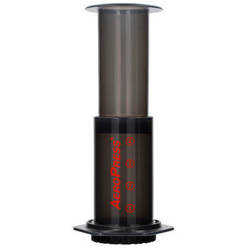
The AeroPress is a relatively recent addition to coffee brewing. Its simple appearance does not reveal everything it can do: two cylinders, one with a plunger seal, form a carefully considered design. A filter cap, funnel, scoop and paper filters are commonly included with the brewer.

For a basic upright recipe, fit a filter into the cap and attach it to the chamber, then place the brewer on a sturdy cup. Add medium-ground coffee and hot water. After a short steep, insert the plunger and press gently to push the coffee through the filter.
Its compact size makes it useful not only at home but also in the office or when travelling.
Freshly roasted coffee — enjoyable in every form
Coffee enthusiasts have long searched for their favourite brewing method. Alongside espresso machines and familiar moka pots, these alternatives offer plenty of ways to explore flavour. Whatever you choose, begin with good-quality, freshly roasted coffee.